
User-oriented design
We focus on ease of use and maximum user satisfaction.
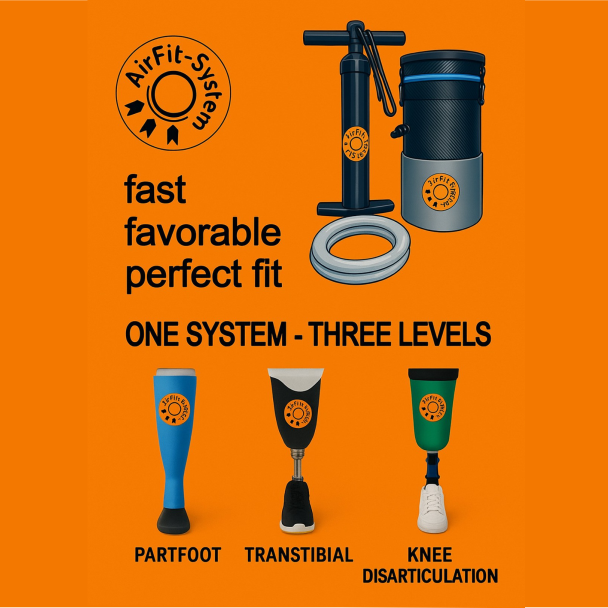
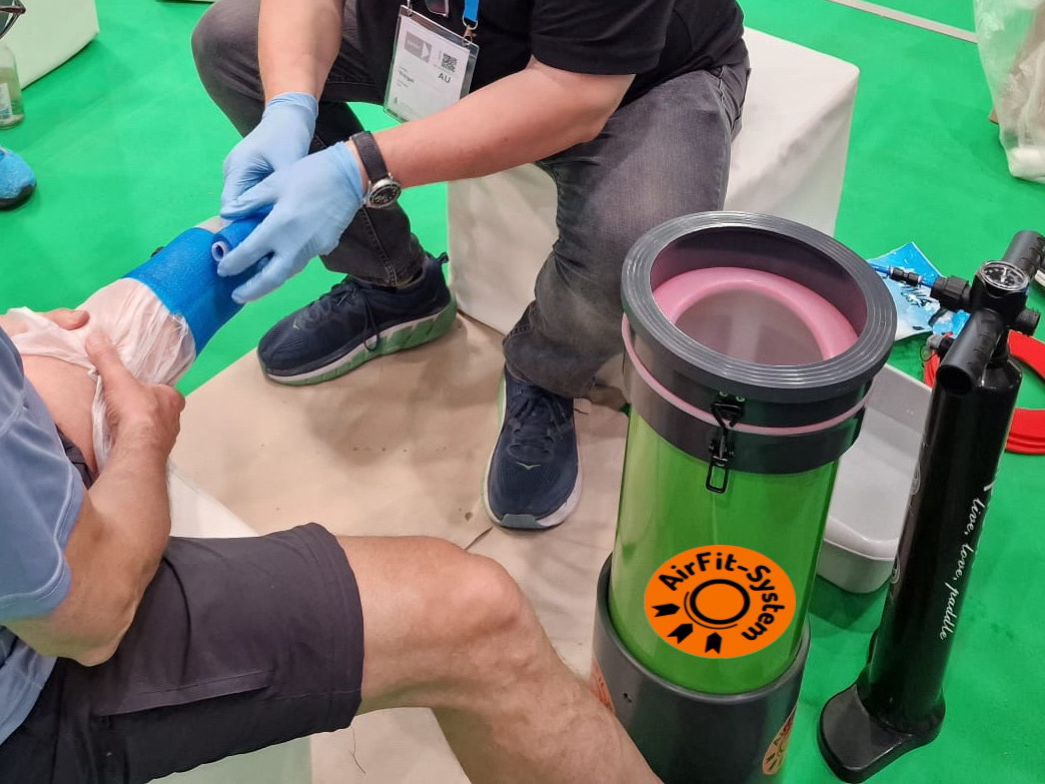
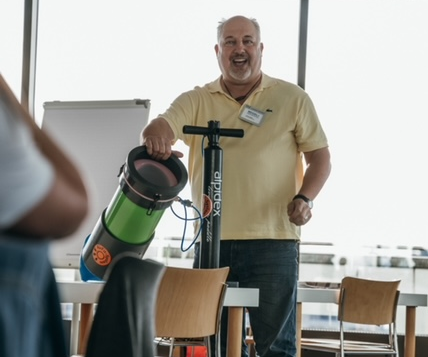
small, easy to carry, location-independent - as no connection for electricity, water or compressor required
Innovative technology
two optional modes included:
- pneumostatic (allover load)
- Pin Liner (elongation)
possible for any type of socket attachment (every liner with pin or sleeve, softsocket with supracondylaer wedges, even velcor belts)
precise fit
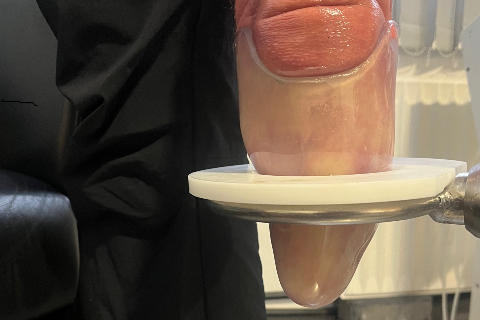
the air pressure is forming the shape of the socket. Because air is compressible, it shrinks the soft tissue more than bony parts.
Result: a perfect fit without modification
idea behind:
We have been partner of a research project with the orthopedic department of the well known Fraunhofer institute, in which we compared 5 different casting techniques at the same patients: by hand, vacuum supported, scanned, ultrasonic and pressure cast. The results have been more different than I could imagine, why I understood that every Prosthetist has their own signature in casting and modifying – but there was no standard, except the pressure casts, who are in equal shape!
So I started to develop my own casting system, that works always in the same process. I included the vertical way, that enables the amputee to stand and load his weight while the casting process. I saw, that the pressure distribution depends on flexibility and length of the inner diaphragm and after several tests we manufacture now the 2nd generation of closed end membrane. I used the compressible material air because it displaces just tissue where it gives way at the stump (non-compressible water presses 1:1 everywhere).
Jochen Weigel (CPO, ISPO cad I)
--------------------------------------------------------
Every prosthetist has their own signature, which can be recognized by the shape of the socket. It is the result of the constant search for perfection. Why not start with a good base that comes from an impression device?
Everyone has to find their own way...
We are happy to help >>> AirFit <<<
--------------------------------------------------------
3D printed sockets with matching reduction?
3D scanners can image the exact surface. However, without knowing the tissue strength and the bony structure underneath.
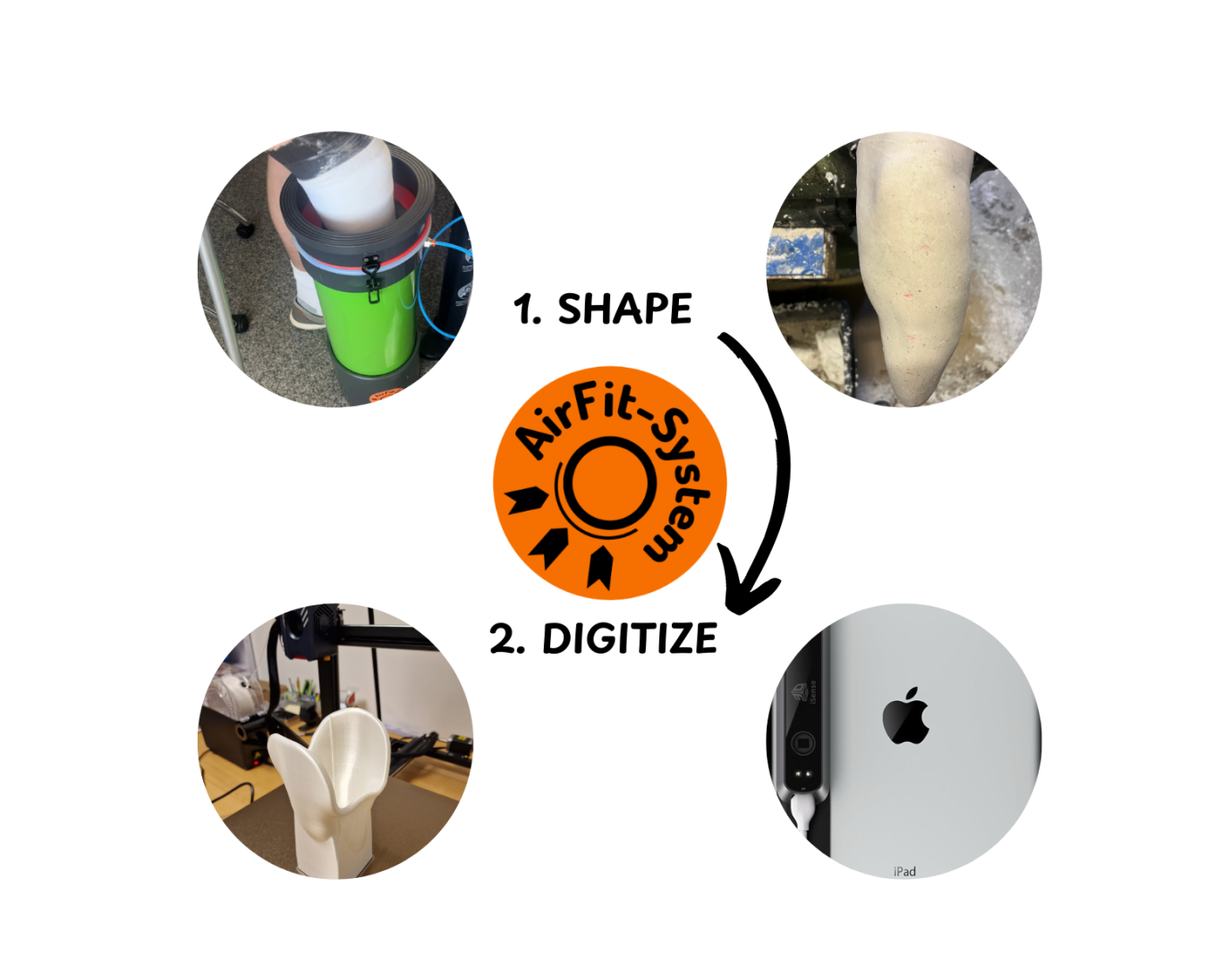
The necessary information is already included in the AirFit negative cast. Simply pour a plaster positive, smooth and now scan it - you will print a perfect fitting socket!
NEW: if you use just a thin one lyer cast, you can scan from outside, what is possible with every smartphone, just reduce the 1 mm layer in the 3D mold and smooth the overlappings zones - a very easy way for a pretty good fit
test sockets
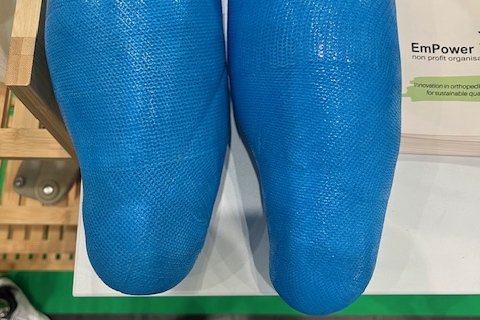
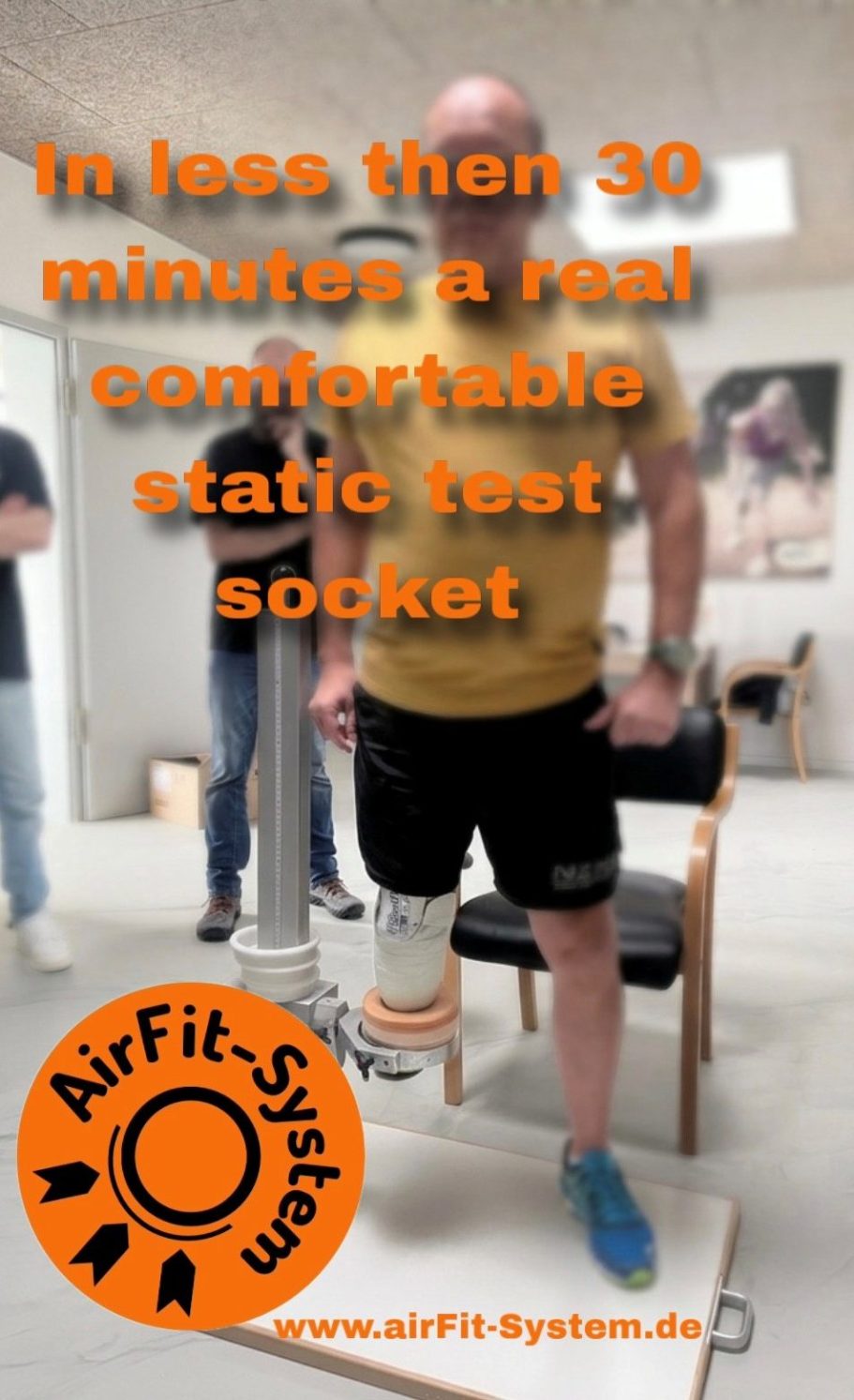
after the glasfiber cast have been formed in the AirFit, the socket can be loaded directly onto a stand. Now you can mark the plumb line and ask the amputee, if he feels comfortable in the new socket.
- cut out the patella and flexion area for the static test
- glue it together with the adaptor and secure them for the dynamic test